|
 |
| In
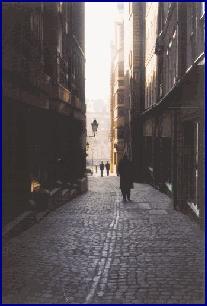
the Autumn of 1888 in the slum of Whitechapel, E. London, from five to ten women lost their lives at the hands of the serial sex murderer who was known as Jack the Ripper. Ripperologists do not agree on how many women were victims of this fiend. Least still do they agree on the identity of Jack the Ripper-and it is clear to me that they do not want to agree; for if they did, then who is going to write the next book about it? |
 |
| Women Usually Counted As Ripper Victims |
|
|
||
| MARY ANN (POLLY) NICHOLS 1845- 1888 |
|
|
|
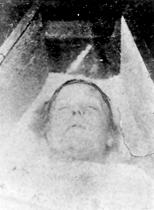
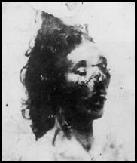
On Thursday, 30 August, l888, Polly Nichols, her hair already greying, her front teeth missing, was walking alone on Whitechapel Road, the long, wide street that is one of the main artories of the neighborhood. Shortly after midnight, she was seen leaving a pub called the Frying Pan on Brick Lane. This establishment still stands on the spot and until a few years ago was little changed from the pub frequented by Polly. Now, however, it has been converted into an Indian restaurant. |
|
|
||
| ANNIE CHAPMAN 1841-1888 |
|
|
|
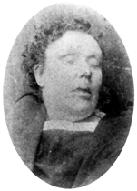
Annie Chapman was said to be undernourished and possibly suffering from chronic lung disease. She sported a black eye due to a recent fight over a half-penny. During the early morning hours between 7 and 8 September, l888, she was found to be drunk in the kitchen of Crossingham's Lodging House, 35 Dorset Street. Asked for her nightly rent, she had to demure and take to the mean streets. |
|
|
||
|
Elizabeth Stride 1843-1888 |
|
|
|
Elizabeth Stride claimed Swedish
descent and tragedy: In 1878 the steamer Princess Alice sank, drowning Elizabeth's husband and two of her children. People were willing to allow her the Swedish descent, while wondering why the Swedish accent was missing. Elizabeth had an on again-off again relationship with a man named Michael Kidney for several years. She also had a number of convictions for drunkenness and on one one occasion had lodged an assault charge against Kidney. |
|
|
||
|
CATHARINE EDDOWES 1842-1888 |
|
|
|
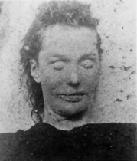
Catharine Eddowes was sometimes called Catharine Kelly, taking the last name of a man with whom she had a relationship. In September of l888 Catharine and Kelly tried to earn a little money by going hop picking in Kent. Predictably, though, they arrived back in the East End of London broke. Early on the morning of 29 September l888, she and Kelly pawned a pair of boots, Catharine receiving the ticket in the name of "Jane Kelly." They bought their breakfast which probably included some liquid refreshments, because by the middle of the day they were broke again. |
|
|
||
|
Kelly, Mary Jane aka Marie Jeanette 1863-1888 |
|
|
|
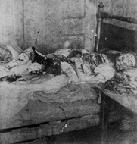
Mary Kelly
was the only one of the Jack the Ripper victims who, at age 25 , still
flashed the relative bloom of youth. We have little corroboration but
Mary’s word for most of her background. She is thought to have been born in
Limerick, spent her childhood in Wales and perhaps prostituted in Cardiff.
She came to London when she was around 21, and allegedly, took work in a
high class brothel in the West End. In this venue, she might have traveled
briefly in Paris with a gentleman. |
|
|
Possible Ripper Victim: Martha Tabram aka Martha or Erma Turner 1849-1888 |
|
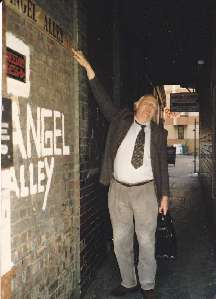
On Monday 6, August,
1888, Marth Tabram hit the streets of Whitechapel with a female friend,
“Pearly Poll.” They picked up two guardsmen. Poll disappeared into Angel
Alley, a narrow entrance off of Whitechapel High Street near the current
site of the Aldgate East Underground Station.
Ref: THE JACK THE RIPPER A TO Z by Begg, Fido, Skinner |
|
More on the White Hart Club and Whitechapel Also-The Suspects |
 |
|
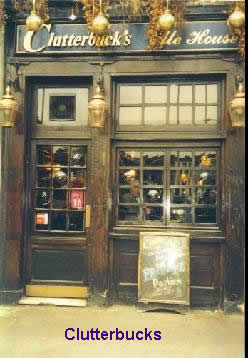
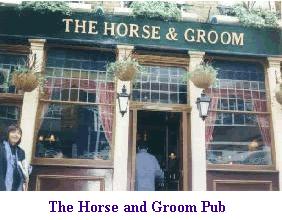
The White Hart Pub still stands on the site, with Gunthorpe Street, formerly George Yard, a narrow alley just to the right. For a short time, this pub was unaccountably renamed "Clutterbuck's" but I was overjoyed to see that, during my last visit to this pub, it had reverted back to its old name "White Hart." These names should never be changed! |
 |
|
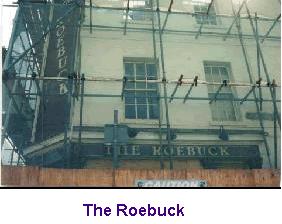
Sadly, though, no one will be drinking at the
Roebuck,Durwood and Brady Streets, another vintage Ripperland pub. The
Roebuck was demolished a couple of years ago. Whenever I went into the
Roebuck, whose barman looked old enough to practically remember 1888, I
would spy a frail looking female drinker, sitting alone, who looked for all
the world like she was waiting for--- for who knows what? |
 |
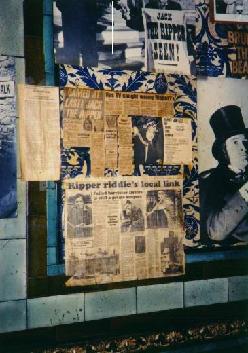
| THE SUSPECTS? Suspects are numerous, for anyone who would venture to write a new Ripper book--and these books fill shelf after shelf in the Charring Cross Road bookstore "Murder One"--has to come up with a new suspect. |
 |
|
PRISONER 1167: THE MADMAN WHO WAS JACK THE RIPPER by James Tully seems to be one of the more carefully researched books. The book has a slightly different title in England: something like "Was This Man Jack the Ripper?" The booksellers had the notion that the English like things posed as a question whereas the Americans like to be told the answers. |
 |
|
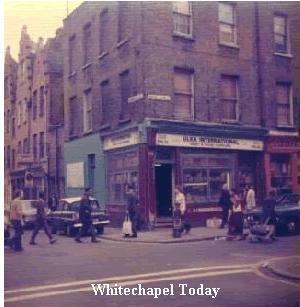
James Kelly had been
confined in Broodmoor (a British Lunatic Asylum) since l883 for stabbing his
wife to death. He was an "East End boy," living with his wife's family at
No. 21 Cottage Lane, a short thoroughfare just off City Road. If you walk
along the street at the side of Liverpool Station and head down Bishopsgate,
you can be in Ripperland within ten or fifteen minutes. |
 |
|
Between the idea
|
 |
 |
|
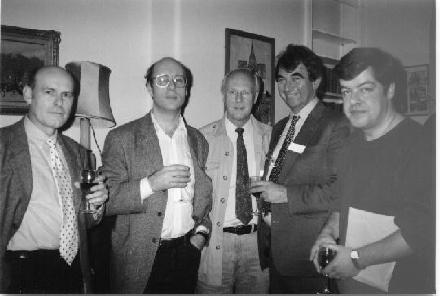
A RIPPEROLOGIST'S RIPPEROLOGIST: F. Eric Hermes The Connection: How does it happen that
some bloke in Baltimore, Maryland manages to link up with a fellow living in
Gloucester, England without knowing anybody in common?! How does it happen
that this connection has lasted for 30+ odd years (VERY odd at times!)? One
answer is Ripperology. One day, back in the 70's, I was sitting in a
posh club where I had no business being, leafing through the pages of a
magazine I had never seen, the British Spectator. The mag offered one
free advert for anyone looking for a book. Some time back, I had read Tom
Cullen's When London Walked in Terror.
But doesn't a “truly great murder” require a “truly
great murderer”? The Prime Suspect does not fit that profile. Would people
want to read about him? Are there enough irrefutable facts? |